When it comes to measuring financial health — whether for an individual, a business, or even a large corporation — leverage ratios are one of the most critical tools. These ratios help investors, lenders, and entrepreneurs understand how much of a company’s operations or investments are funded by borrowed money compared to equity or income.
In simple terms, a leverage ratio shows how “leveraged” someone or something is — meaning how much they rely on credit leverage or financial leverage to grow. High leverage can mean faster growth if managed well, but it can also signal higher risk if debts outweigh earnings.
If you’re an entrepreneur looking to build wealth using business credit, understanding leverage ratios is essential. They aren’t just numbers on a spreadsheet; they represent the story of how you’re using borrowed capital to achieve financial goals. In this article, we’ll explain:
What leverage ratios are
The most common types of leverage ratios
Why they matter for businesses and investors
Real-world examples
How Credit Leverage X helps entrepreneurs manage leverage responsibly
What Are Leverage Ratios?
A leverage ratio is a financial metric that compares a company’s debt to other financial measures such as equity, assets, or income. It answers questions like:
How much debt is the company carrying compared to its equity?
Does the company generate enough income to cover its debt payments?
Is the business overextended, or is it managing leverage responsibly?
These ratios matter because debt itself isn’t bad. In fact, most successful companies and entrepreneurs use borrowed money to grow. But too much debt, or poorly managed leverage, can increase risk and lead to financial strain.
👉 A leverage ratio provides a snapshot of financial stability and borrowing capacity.
Why Leverage Ratios Matter
1. For Lenders
Banks and financial institutions use leverage ratios to determine how risky it is to lend money. A company with extremely high debt-to-equity may struggle to get approved for additional funding.
2. For Investors
Investors analyze leverage ratios to decide whether a business is a safe bet. A balanced ratio shows the company is using leverage to grow while maintaining financial discipline.
3. For Entrepreneurs
For small businesses and startups, leverage ratios show whether borrowed money is fueling growth or creating unnecessary risk. Entrepreneurs who understand these ratios can approach lenders more confidently and make smarter funding decisions.
Key Types of Leverage Ratios
There are several types of leverage ratios, each with a different focus. Let’s break down the most important ones:
1. Debt-to-Equity Ratio (D/E)
Formula:
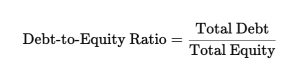
This ratio compares what a company owes to what it owns.
Example: If a company has $500,000 in debt and $250,000 in equity, the D/E ratio is 2:1. This means the company has twice as much debt as equity.
2. Debt-to-Asset Ratio
Formula:

This ratio measures how much of a company’s assets are financed by debt.
3. Interest Coverage Ratio
Formula:

This ratio shows how easily a company can pay interest on its debt.
A ratio above 3 means the company comfortably covers interest payments.
A ratio below 1 means the company struggles to cover interest, signaling financial stress.
4. Debt-to-Income Ratio (Personal Finance Context)
While businesses use D/E or debt-to-asset ratios, individuals often track their debt-to-income ratio (DTI).
Formula:

For entrepreneurs, keeping this ratio low ensures personal finances don’t collapse under business risk.
Real-World Examples of Leverage Ratios
Example 1: Healthy Use of Leverage
A startup borrows $100,000 in business credit to launch an eCommerce store. Within a year, the store generates $300,000 in revenue with $60,000 profit. Their interest coverage ratio is strong, and the debt-to-equity ratio shows balance.
👉 This is good leverage — borrowed money accelerates growth.
Example 2: Over-Leverage Risk
A company borrows aggressively, piling up $1 million in debt while generating only $100,000 in equity. Their debt-to-equity ratio is 10:1. While they may grow quickly, one downturn could collapse the business.
👉 This is bad leverage — debt outweighs financial stability.
How Entrepreneurs Should Use Leverage Ratios
Understanding leverage ratios isn’t just for accountants or CFOs. Every entrepreneur should monitor these metrics to ensure:
They’re not borrowing beyond their capacity to repay.
Borrowed capital is directed toward ROI-producing opportunities.
Their financial profile looks attractive to lenders and investors.
At Credit Leverage X, we teach clients how to:
Track their leverage ratios.
Adjust borrowing strategies to maintain healthy ratios.
Use leverage ratios as a negotiation tool when applying for more funding.
Credit Leverage & Leverage Ratios
Credit leverage, when combined with proper ratio management, creates a powerful cycle:
Build a fundable profile.
Access $50,000–$250,000+ in business credit.
Invest borrowed funds into profitable opportunities.
Maintain strong leverage ratios by ensuring income growth outpaces debt obligations.
Qualify for even more funding at better terms.
👉 This is the difference between struggling with debt and using borrowed money as a wealth multiplier.
Key Takeaways
Leverage ratios measure the balance between debt and equity, assets, or income.
Common ratios include debt-to-equity, debt-to-assets, and interest coverage.
Healthy leverage ratios signal financial strength, while unhealthy ones warn of over-leverage.
Entrepreneurs should track these ratios to borrow responsibly and attract funding.
Credit Leverage X helps entrepreneurs build, manage, and leverage funding while maintaining financial stability.
Ready to Leverage Your Credit?
Book a no-cost strategy call and get expert guidance, personalized solutions, and real opportunities to move your goals forward.
Get Started
Frequently Asked Questions