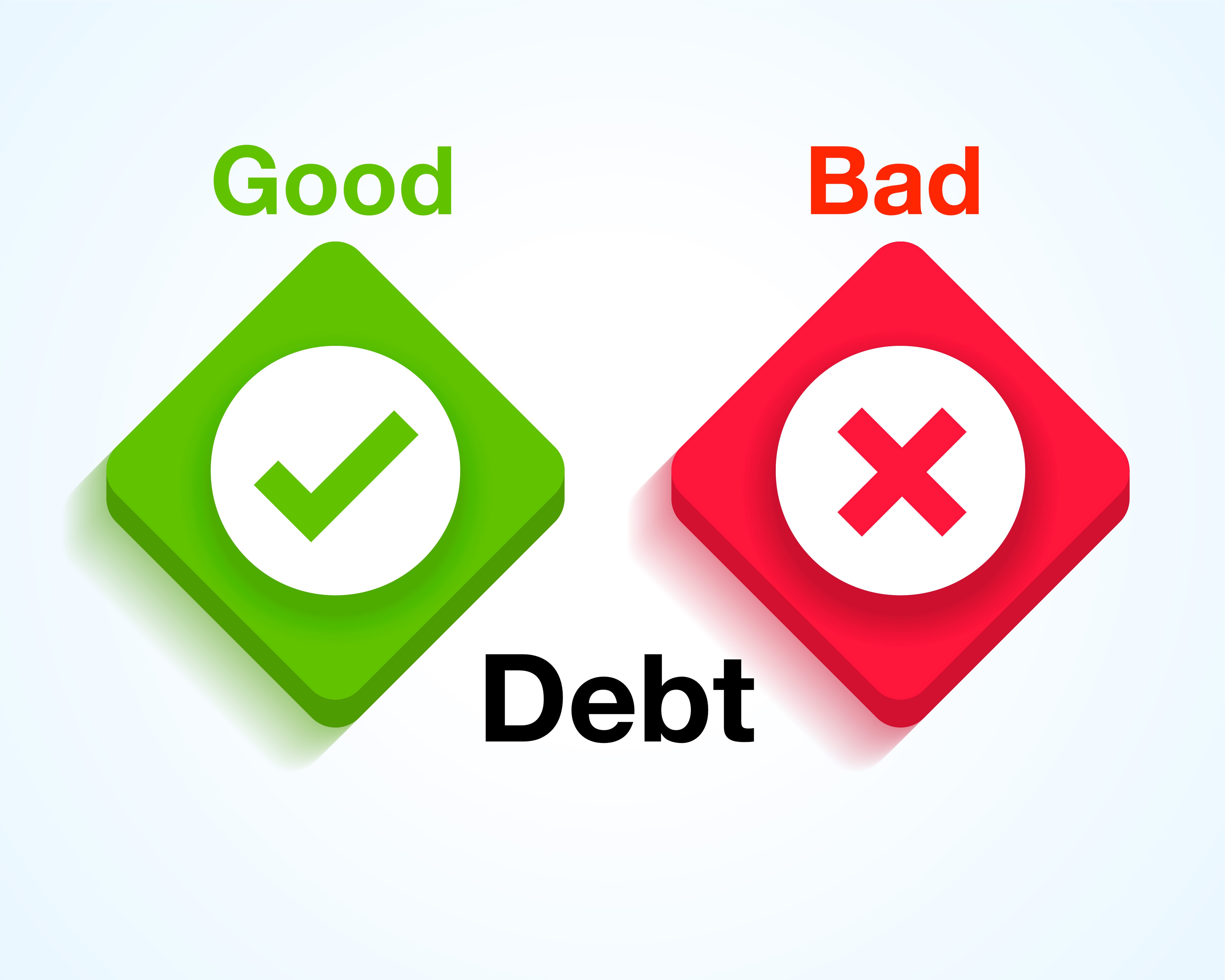
Not all debt is created equal. While some types of debt can weigh you down and limit financial growth, others can actually be used as a tool to build wealth. The key is understanding the difference between good debt vs bad debt and knowing how to leverage the right kind of debt to your advantage.
For entrepreneurs and business owners, this distinction is critical. Used strategically, good debt can unlock funding, fuel business growth, and build long-term financial independence. Misused, bad debt can quickly drain resources and damage credit.
Debt, at its simplest, is borrowed money that must be repaid with interest. The impact of debt depends not just on the amount borrowed, but on how that money is used, what kind of return it generates, and how it’s managed.
Good debt is borrowing that leads to long-term value or income generation. It can increase your net worth, boost earning potential, or create assets.
Examples of good debt include:
Student loans (when education increases earning potential)
Business loans or credit (used for expansion and revenue growth)
Real estate mortgages (for property that appreciates or produces rental income)
When managed correctly, good debt creates opportunities that may not have been possible with savings alone. It allows you to invest in your future and generate returns that outweigh the cost of borrowing.
Bad debt is borrowing that does not create future value and often leads to financial strain. It typically funds depreciating assets or consumption without return.
Examples of bad debt include:
High-interest credit card debt (used for non-essential purchases)
Payday loans
Auto loans for luxury cars (vehicles lose value quickly)
Bad debt often carries high interest rates and creates a cycle of repayment without any wealth-building benefit. Over time, it limits financial flexibility and damages credit.
| Factor | Good Debt | Bad Debt |
|---|---|---|
| Purpose | Builds wealth, generates income | Funds consumption or depreciating assets |
| Return | Long-term value, positive ROI | No return, often negative ROI |
| Impact | Improves credit profile if managed well | Hurts credit profile |
| Examples | Student loans, mortgages, business loans | High-interest credit cards, payday loans |
For entrepreneurs, good debt can be the bridge between a business idea and long-term success. Using credit strategically allows you to:
Access funding for growth opportunities
Build credibility with lenders
Diversify investments in income-generating assets
This is where Credit Leverage X comes in — helping entrepreneurs separate good debt from bad and create strategies that transform credit into wealth.
Good debt builds assets and income potential, while bad debt drains resources.
Entrepreneurs can use good debt to scale businesses, invest, and build wealth.
Recognizing the difference ensures smarter financial decisions.
Guidance from experts like Credit Leverage X can help maximize the benefits of good debt.
Book a no-cost strategy call and get expert guidance, personalized solutions, and real opportunities to move your goals forward.
Book A Free Funding ConsultationStudent loans, mortgages, or business loans that create long-term value.
Because it typically funds consumption, carries high interest, and doesn’t generate returns.
Yes — good debt can be used to fund investments, education, or businesses that increase income.
Ask: Does this debt create long-term value or income? If not, it’s likely bad debt.
Yes — they help clients structure credit, reduce bad debt, and leverage good debt for wealth building.
A better credit score starts with the right strategy. Let Credit Leverage X help you take control of your finances, improve your credit, and unlock the funding you deserve.
Start Your Credit Strategy



Subscribe now to keep reading and get access to the full archive.