Leverage is one of the most powerful — and often misunderstood — concepts in business and finance. At its core, leverage refers to using resources, borrowed money, or fixed costs to amplify outcomes. The right kind of leverage allows companies and entrepreneurs to achieve more with less: more growth, more profit, and more scalability without needing to invest only their own cash.
There are three main types of leverage every entrepreneur and investor should understand:
Financial leverage – using credit or borrowed capital to increase returns.
Operating leverage – using fixed costs and systems to scale revenue.
Combined leverage – using both financial and operating leverage together for maximum impact.
In this article, we’ll explore each type in depth, provide formulas and real-world examples, debunk common myths, and show how Credit Leverage X helps entrepreneurs apply leverage responsibly to grow wealth.
What Is Financial Leverage?
Financial leverage refers to using borrowed funds (loans, business credit, or other financing) to invest in income-generating activities.
Formula
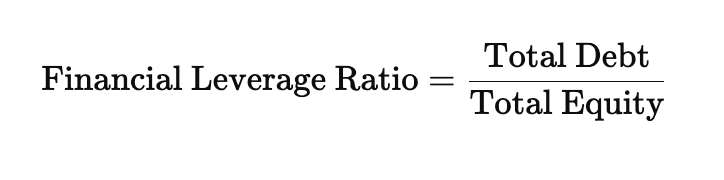
Explanation
Example
An entrepreneur borrows $100,000 to launch a managed eCommerce store. The store generates $200,000 in sales, with $50,000 profit after repaying debt. Without the borrowed funds, the business wouldn’t have scaled as quickly.
👉 This is good financial leverage: borrowed money created growth faster than personal savings alone.
What Is Operating Leverage?
Operating leverage refers to how a company uses fixed costs (such as rent, salaries, or equipment) to generate revenue. High operating leverage means a business has high fixed costs but low variable costs, so as sales increase, profits rise significantly.
Formula

Explanation
High DOL businesses: software companies, digital platforms, streaming services.
Low DOL businesses: consulting firms or trades that rely heavily on variable labor costs.
Example
A SaaS company spends $500,000 annually on development and infrastructure. Whether they sell 1,000 or 100,000 subscriptions, costs remain mostly fixed. Each additional sale generates massive profit because overhead doesn’t rise proportionally.
👉 This is operating leverage in action: fixed costs create scalability.
What Is Combined Leverage?
Combined leverage occurs when a business uses both financial leverage (debt) and operating leverage (fixed costs) to amplify returns.
Formula

Where:
Explanation
Combined leverage is powerful but risky. It magnifies both upside and downside, since businesses are relying on both debt obligations and fixed costs to grow.
Example
A company invests $1M (partly funded with loans) into building an automated fulfillment center.
Fixed costs (rent, equipment) create high operating leverage.
Debt financing creates financial leverage.
If sales rise, profits skyrocket. But if sales fall, the company may struggle with both loan repayments and high fixed costs.
👉 Combined leverage is like a double-edged sword: it can multiply returns or accelerate losses.
Comparing the Types of Leverage
| Type | How It Works | Pros | Cons | Example |
|---|
| Financial | Borrowed money to fund growth | Accelerates expansion, builds wealth faster | Increases repayment obligations | Using business credit to launch an eCommerce brand |
| Operating | Fixed costs generate scale | Profits increase rapidly after break-even | Risk if sales fall short of covering fixed costs | SaaS subscription model |
| Combined | Uses both financial & operating leverage | Maximum growth potential | Maximum risk exposure | Automated eCommerce warehouse funded with debt |
Risks of Each Type of Leverage
Financial Leverage Risks
Over-leverage leading to debt repayment issues.
Rising interest rates increasing costs.
Credit score damage if poorly managed.
Operating Leverage Risks
Combined Leverage Risks
Magnifies both profits and losses.
Vulnerable to economic cycles (e.g., recessions, demand drops).
👉 This is why mentorship and strategy matter — so entrepreneurs use leverage as a tool, not a trap.
How Entrepreneurs Can Use Leverage Strategically
Start with financial leverage: Build a business credit profile to secure $50,000–$250,000 in funding.
Introduce operating leverage: Use automation, digital tools, and systems to increase profit margins as sales grow.
Combine carefully: Only pursue combined leverage when cash flow is consistent and predictable.
At Credit Leverage X, we help entrepreneurs:
Build strong business credit.
Secure capital to fund eCommerce, digital campaigns, or other ventures.
Apply operating leverage with automation and scalable systems.
Balance leverage ratios to maximize growth without overexposure.
Key Takeaways
Financial leverage uses borrowed money to accelerate growth.
Operating leverage uses fixed costs to scale profits.
Combined leverage multiplies both risk and reward.
Entrepreneurs must balance leverage types carefully to avoid overexposure.
Credit Leverage X equips entrepreneurs with the knowledge and funding to apply leverage responsibly.
Ready to Leverage Your Credit?
Book a no-cost strategy call and get expert guidance, personalized solutions, and real opportunities to move your goals forward.
Get Started
Frequently Asked Questions