Disclaimer: This article is for educational purposes only and does not constitute financial, legal, or investment advice. Credit Leverage X (CLX) educates and mentors entrepreneurs to help them responsibly access and manage business funding for sustainable growth.
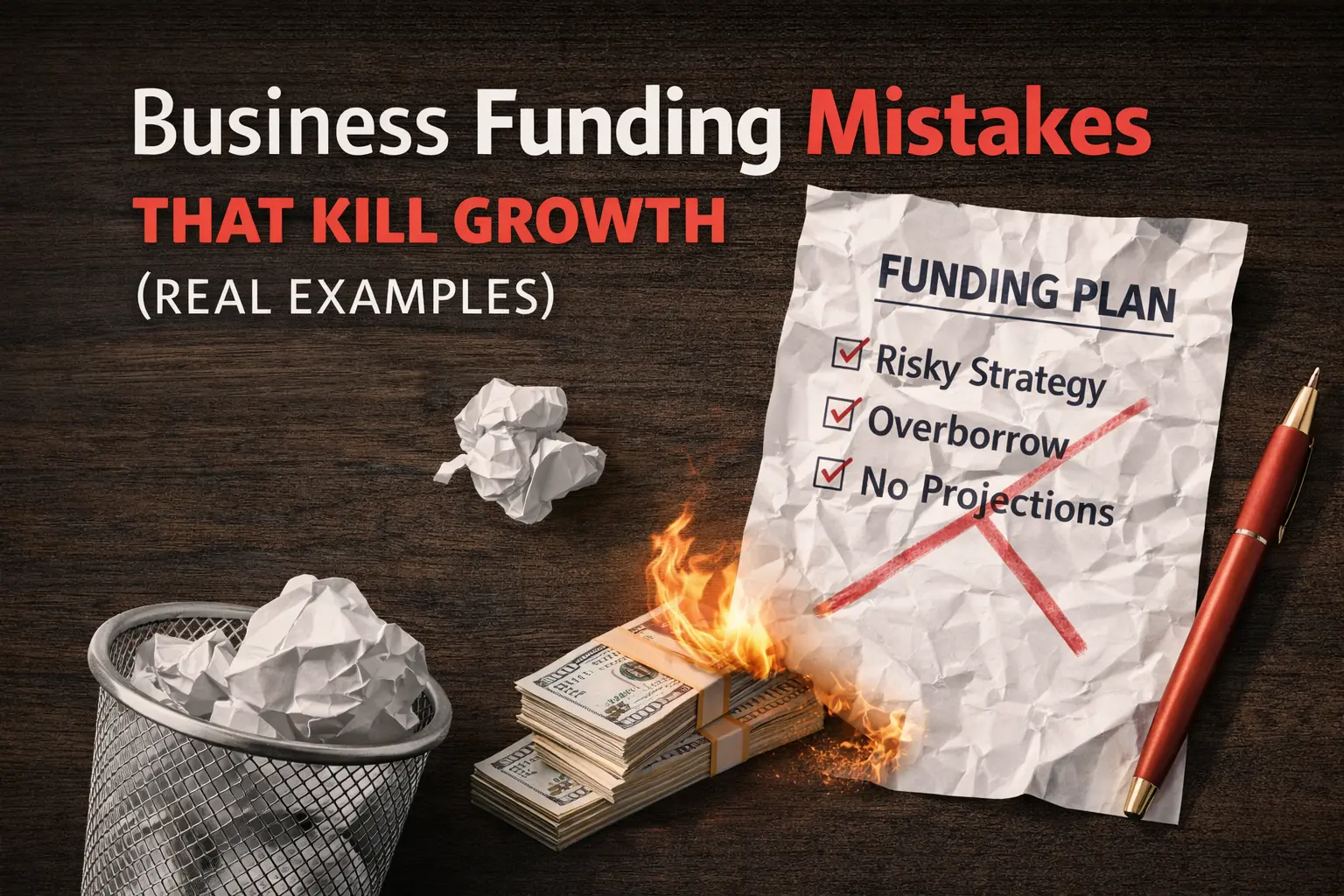
Many entrepreneurs believe capital is the missing ingredient.
They assume:
“If I just had more money, the business would grow.”
Sometimes that is true.
But often, funding does not solve underlying business problems—
It magnifies them.
Capital amplifies execution.
If your systems are efficient, funding can accelerate growth.
If your systems are weak, funding can accelerate dysfunction.
This is why some businesses scale dramatically after funding—
While others become more stressed, less profitable, and more unstable.
The difference is rarely the capital itself.
It is how that capital is used.
One of the most common mistakes is securing funding first and deciding what to do with it later.
This creates reactive deployment.
Instead of strategic deployment.
A founder secures $150,000 in funding.
Without a clear plan, they spread it across:
Six months later:
The problem was not funding.
The problem was lack of deployment strategy.
Growth capital should fund expansion.
Not subsidize broken economics.
Yet many businesses use funding to repeatedly cover:
A service business raises capital to “improve cash flow.”
But the true issue is underpricing and bloated payroll.
The funding temporarily relieves pressure—
But within months, the business is in the same position again.
Why?
Because capital cannot permanently fix a structurally unprofitable model.
Some businesses deploy heavily into marketing before operations can support increased demand.
This creates:
An agency secures funding and doubles ad spend immediately.
Lead volume surges.
But sales and fulfillment teams are not prepared.
Close rates fall.
Client onboarding breaks.
Retention drops.
Revenue spikes briefly—then collapses.
Many operators assume:
“If we spend X, we’ll make Y.”
Without historical proof.
Funding based on optimistic assumptions creates dangerous expectations.
An e-commerce brand assumes a new ad campaign will produce 4x ROAS.
They deploy $80K rapidly.
Actual ROAS comes in at 1.4x.
Margins compress.
Cash is tied up.
Inventory replenishment becomes difficult.
The issue was not marketing.
It was deploying based on assumptions instead of validated economics.
More funding is not always better.
Excess capital can create:
A founder secures more capital than operationally needed.
Feeling abundant, they:
The business grows overhead faster than revenue.
Soon, the funding that was meant to create leverage creates pressure instead.
Not all capital is equally usable.
Some businesses focus only on approval amount—
Ignoring:
A business takes on aggressive short-term financing.
The capital helps temporarily—
But repayment pressure strains monthly cash flow so severely that growth stalls.
Capital structure matters as much as capital amount.
This is perhaps the most dangerous mindset.
Funding is not revenue.
Funding is not profit.
Funding is not success.
It is borrowed leverage.
Businesses that mentally treat funding like earned money often overspend.
Disciplined operators treat every dollar as deployed capital requiring return.
At their core, most funding mistakes stem from the same issue:
Confusing access to capital with business readiness.
Approval does not mean the business is prepared to use capital effectively.
It only means capital is available.
Operational readiness still matters.
Strategic clarity still matters.
Execution still matters.
Strong operators prepare before funding arrives.
They know:
Funding enters a system.
It does not create one.
Sophisticated founders do not ask:
“How much can I get?”
They ask:
“Can the business deploy capital efficiently enough to justify taking it?”
That is the more mature question.
Because sometimes the right move is not raising more.
Sometimes the right move is improving deployment capability first.
Funding can accelerate growth.
But only when paired with sound strategy.
Otherwise, it accelerates mistakes.
The businesses that benefit most from funding are not simply the ones that get approved—
They are the ones operationally prepared to convert capital into profitable growth.
Because in business:
Capital is an amplifier.
It will make strong systems stronger—
And weak systems weaker.
What is the biggest business funding mistake?
Securing capital without a clear deployment strategy.
Can funding hurt a business?
Yes—if used poorly, it can create debt pressure and magnify operational problems.
Should businesses take maximum approval amounts?
Not always—capital should match operational need and deployment capacity.
Why doesn’t funding always create growth?
Because funding amplifies execution; it does not fix broken systems.
How should businesses prepare before funding?
By creating a deployment plan, ROI projections, and operational readiness assessment.
A better credit score starts with the right strategy. Let Credit Leverage X help you take control of your finances, improve your credit, and unlock the funding you deserve.
Start Your Credit Strategy





Subscribe now to keep reading and get access to the full archive.