Disclaimer: This article is for educational purposes only and does not constitute financial, legal, or investment advice. Credit Leverage X (CLX) educates and mentors entrepreneurs to help them responsibly access and manage business funding for sustainable growth.
TL;DR
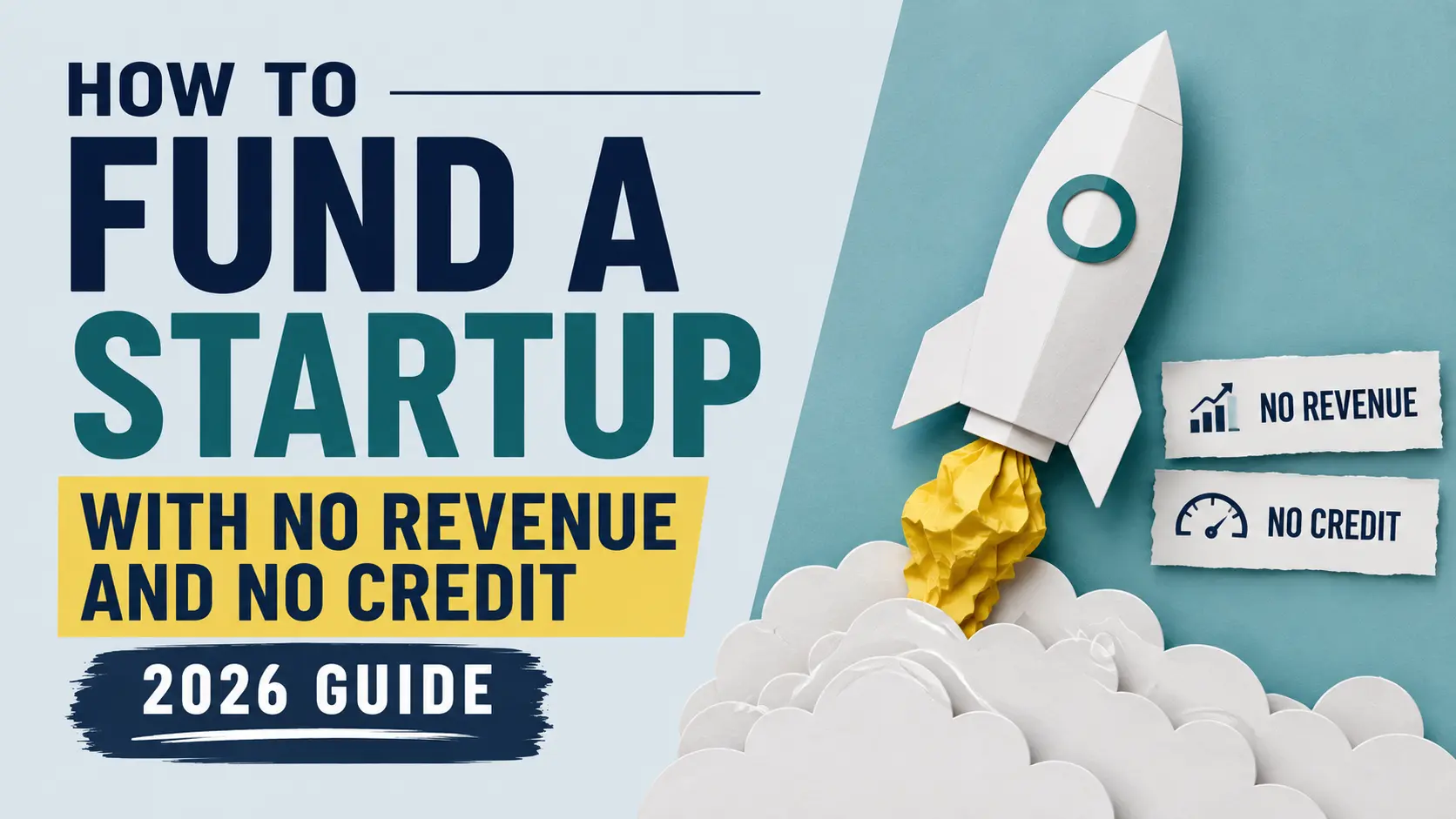
Most founders believe you need revenue to get funding, and credit to get credit. Both are wrong — but only if you understand the actual underwriting logic lenders and capital sources use.
Lenders aren’t looking for perfection. They’re looking for signals of repayment capacity and operational legitimacy. When revenue and credit history are absent, you replace them with structure, documentation, and alternative proof points. That’s the entire game at the pre-revenue stage.
This guide is not a list of grant websites to Google. It’s a capital strategy for operators who want to move fast, build correctly, and access real money.
—
Traditional bank loans use a simple filter: time in business, annual revenue, and credit score. Pre-revenue startups fail all three. That doesn’t mean the door is closed — it means you’re knocking on the wrong door.
The funding landscape in 2026 has matured significantly. According to the SBA’s lending data, microloan programs, Community Development Financial Institutions (CDFIs), and SBA 7(a) loans with alternative underwriting have expanded access for early-stage businesses. These programs exist specifically because traditional banks exclude high-potential startups.
The strategic pivot is simple: stop applying for products designed for established businesses and start applying for products designed for your stage.
| Funding Type | Revenue Required | Credit Required | Realistic Range |
|---|---|---|---|
| Traditional Bank Loan | Yes | 680+ | $50K–$500K |
| SBA Microloan | No | Soft check | $500–$50K |
| 0% Business Credit Cards | No | 680+ personal | $10K–$150K |
| Revenue-Based Financing | Yes (some) | Flexible | $5K–$250K |
| Equity Crowdfunding | No | None | $10K–$5M |
| Grants (SBIR, state) | No | None | $2K–$2M |
—
Funding follows structure. The single most common mistake pre-revenue founders make is applying for capital before their business looks like a business on paper.
Before any application, you need:
Once your entity is structured correctly, you become eligible for a category of funding most operators overlook: 0% introductory APR business credit. This is one of the most powerful business funding solutions available at the pre-revenue stage — real capital, no interest, no revenue verification required.
—
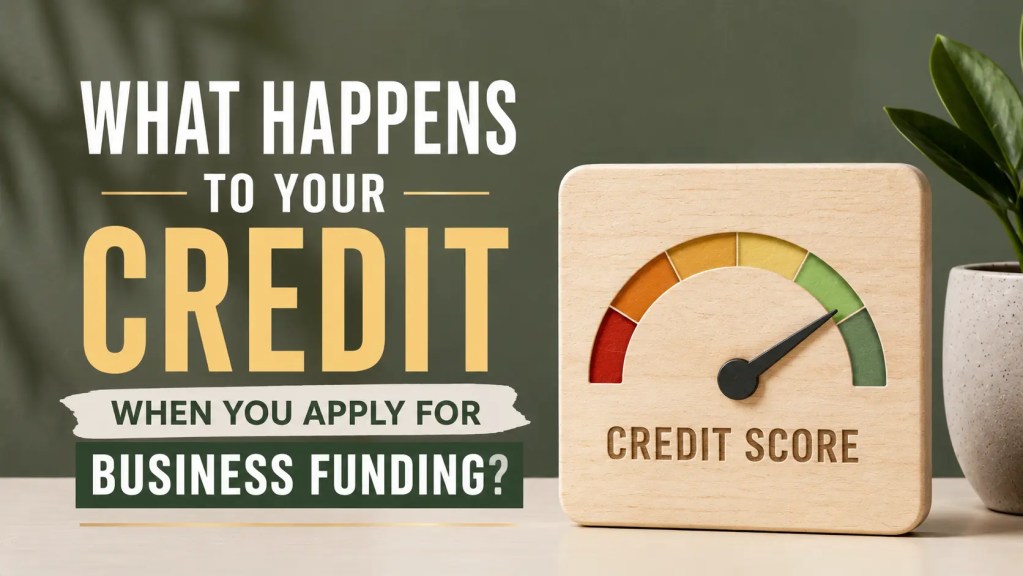
At the pre-revenue stage, your personal credit profile is the primary underwriting lever. This is non-negotiable. A 680+ personal FICO score unlocks business credit cards, SBA microloans, and CDFI products. A 720+ score opens significantly more doors and better terms.
If your score isn’t there, the most important thing you can do before applying for any startup capital is fix it. Dispute inaccuracies, reduce utilization below 30%, and add positive tradelines. This is not a six-month project — meaningful score improvements can happen in 30–60 days with the right interventions.
Understanding how to use credit as leverage — not just access — is what separates operators who get funded from those who get declined. Review the fundamentals of credit leverage before you apply for anything. The strategy layer matters as much as the score itself.
| Personal Credit Score | Capital Access at Pre-Revenue Stage |
|---|---|
| Below 620 | Very limited; grants and crowdfunding only |
| 620–659 | CDFIs, some microloans, secured cards |
| 660–699 | SBA microloans, select business credit cards |
| 700–719 | 0% APR business cards, CDFI term loans |
| 720+ | Full business credit stack, higher limits, better terms |
—
This is the most underused and misunderstood tool in startup funding. Multiple 0% introductory APR business credit cards — applied for strategically within a short window — can generate $30K–$150K in working capital with zero interest for 12–21 months.
The key word is stacked. A single card gives you one credit line. A properly sequenced application strategy across multiple issuers gives you a capital pool. This requires a 680+ personal score, a registered entity, and timing discipline. Understand the 2-2-2 credit rule before you apply — the sequencing of applications directly affects how much you’re approved for.
SBA Microloans go up to $50,000 and are administered through nonprofit intermediaries who evaluate character, business plan, and community impact — not just revenue history. CDFIs (Community Development Financial Institutions) operate on similar underwriting logic and often serve underrepresented founders specifically.
The Federal Reserve’s Small Business Credit Survey consistently shows that CDFI applicants report higher approval rates than applicants to large banks, particularly for startups and minority-owned businesses. These institutions are built for your stage.
Grants are non-dilutive capital, meaning you don’t give up equity or take on debt. The SBIR (Small Business Innovation Research) program alone distributes over $3 billion annually to early-stage technology companies. State economic development agencies, foundations, and private corporations also fund startups in targeted industries.
Grants require time investment — applications are competitive and detailed. But for founders who qualify, they represent the cleanest form of startup capital available.
Pre-selling your product or service before it exists is not desperation — it’s validation capital. Platforms like Kickstarter and Indiegogo have collectively funded billions in pre-revenue startups. Equity crowdfunding through Regulation CF allows you to raise up to $5 million from non-accredited investors.
The strategic value beyond the capital itself: a successful crowdfunding campaign is documented proof of market demand, which becomes a supporting data point in future institutional funding applications.
—
The operators who successfully fund startups with no revenue and no credit history don’t rely on a single source. They build a capital stack — combining 0% credit, a microloan, and potentially a grant — to reach their operational threshold.
| Capital Stack Example | Amount | Cost |
|---|---|---|
| 0% APR Business Credit (stacked) | $40K–$80K | $0 interest (12–21 months) |
| SBA Microloan | $10K–$50K | ~8–13% APR |
| State or Federal Grant | $5K–$50K | $0 |
| Pre-Sales / Crowdfunding | Variable | 5–8% platform fee |
| Combined Potential | $55K–$180K+ | Low to zero cost |
Once you’re operating with working capital and can show 3–6 months of business bank statements, the next tier of funding — revenue-based financing, SBA 7(a) loans, and institutional credit — becomes accessible. The goal isn’t just to fund the startup. It’s to build the track record that funds the growth. That’s how you turn $50K into $250K in revenue — strategic deployment, not just access.
According to SCORE’s 2024 Small Business Research, businesses that access multiple funding sources in their first year are significantly more likely to reach profitability within 24 months than those relying on a single capital source. Stack intelligently. Move fast. Build the record.
—
No revenue and no business credit history are starting conditions, not permanent disqualifiers. The founders who get funded at this stage do two things differently: they build a fundable structure before they apply, and they match their capital sources to their actual stage.
Stop applying for bank loans you won’t get. Start building the entity, the credit profile, and the documentation that makes the right capital sources say yes.
It’s difficult but not impossible. With a personal score below 620, your best options are grants, crowdfunding, pre-sales, and CDFIs that use character-based underwriting. Improving your personal credit score — even modestly — should run parallel to any funding strategy at this stage.
With a strong personal credit profile (700+) and a properly structured business entity, a stacked 0% APR business credit strategy combined with a microloan can realistically generate $50K–$150K. Grants and crowdfunding can extend this further depending on your industry and campaign execution.
For most SBA microloans, CDFIs, and grant programs — yes. A one-page business plan with a clear value proposition, target market, and basic financial projections is typically required and significantly improves your approval odds. It also forces clarity in your own strategy.
0% business credit cards can be approved within 7–14 days after entity setup. SBA microloans typically take 30–90 days. Grants vary widely — some have rolling applications while others have annual cycles. Plan for 30–60 days minimum for any structured funding strategy.
It can be, particularly under Regulation CF which allows raises up to $5 million from non-accredited investors. The key is having a compelling story, a clear market, and the willingness to manage investor communications. The upside: no debt and no personal credit requirements. The downside: you give up equity and it requires significant marketing effort to succeed.
A better credit score starts with the right strategy. Let Credit Leverage X help you take control of your finances, improve your credit, and unlock the funding you deserve.
Start Your Credit Strategy




Subscribe now to keep reading and get access to the full archive.