Disclaimer: This article is for educational purposes only and does not constitute financial, legal, or investment advice. Credit Leverage X (CLX) educates and mentors entrepreneurs to help them responsibly access and manage business funding for sustainable growth.
TL;DR
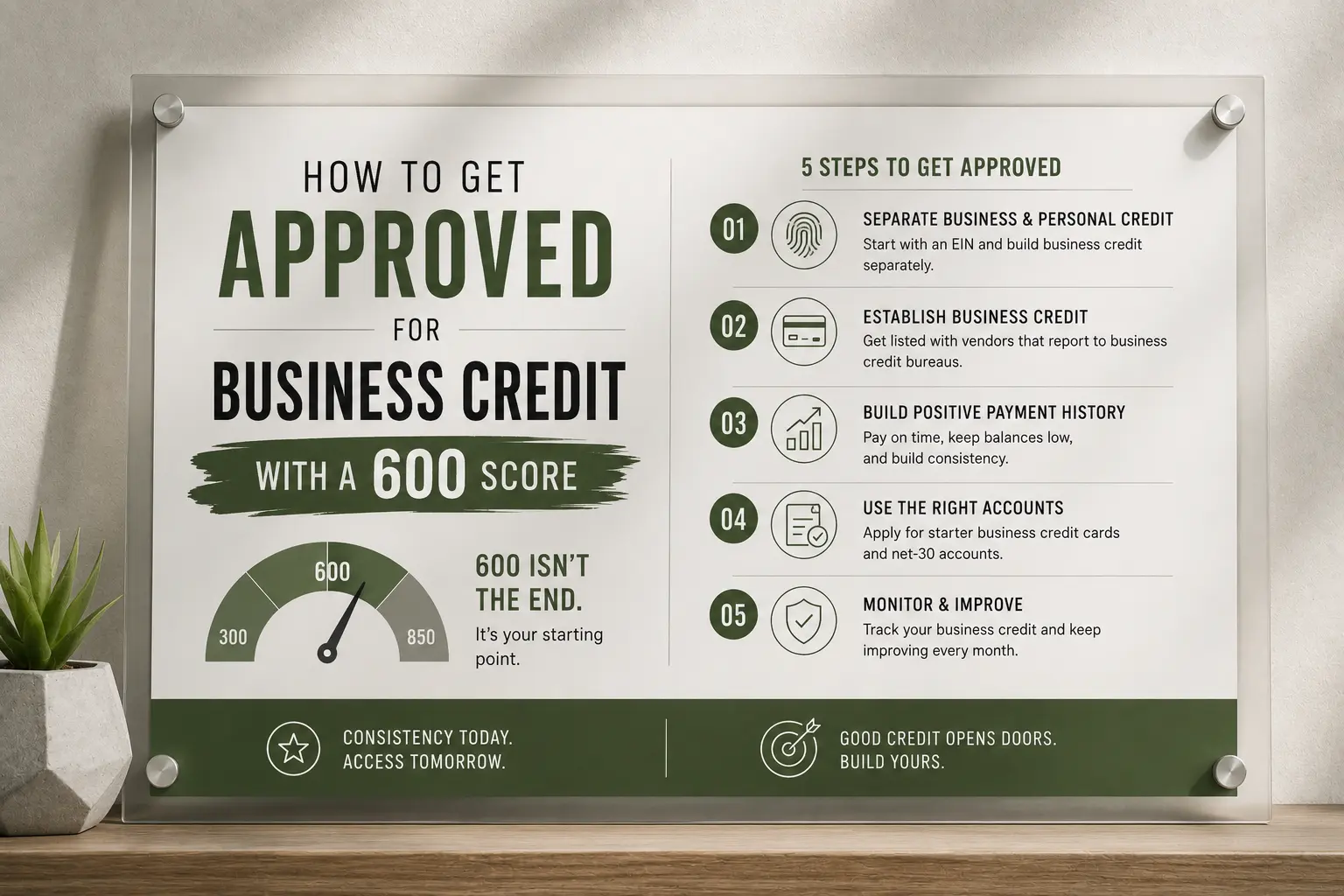
Most operators walk into a funding situation thinking their personal credit score is the whole story. It isn’t. A 600 FICO is a constraint — it narrows your lender pool and raises your cost of capital. But it does not eliminate your access to real money.
The lenders you can’t access at 600 are mostly conventional banks and credit unions requiring 680+. What remains is a substantial market: alternative lenders, CDFI institutions, equipment financiers, SBA microloan intermediaries, and trade credit networks — all of which underwrite differently.
The operators who get funded at 600 aren’t lucky. They understand the full credit landscape and position their business profile to compensate for what the score doesn’t show.
—
Your FICO score triggers a risk category, not a verdict. When a non-bank lender sees 600, they immediately look for compensating factors — business metrics that reduce perceived risk regardless of personal credit history.
Lenders at this tier are underwriting the business, not just the owner. The compensating factors that carry the most weight:
Understanding financial leverage means knowing that capital access is about structuring the deal correctly — not waiting until your score hits an arbitrary threshold.
—
Not all capital sources treat your score the same way. Here’s a practical breakdown of what’s realistically accessible:
| Funding Type | Min. Personal Credit | Key Underwriting Factor |
|---|---|---|
| Net-30 Vendor Accounts | None to 550 | Business age, EIN status |
| SBA Microloan (CDFI) | 575–620 | Business plan, revenue |
| Equipment Financing | 580–620 | Equipment value as collateral |
| Invoice Factoring | 500–600 | Customer creditworthiness |
| Alternative Term Loans | 600–625 | Revenue, time in business |
| Business Line of Credit | 620–640 | Bank history, revenue |
The lowest-friction entry points at 600 are vendor accounts and equipment financing because they’re secured by either the relationship or the asset. Start there if you need to build runway fast.
The SBA microloan program operates through nonprofit intermediaries — not banks. These intermediaries have explicit mandates to serve underserved borrowers, which frequently means they’ll work with scores in the 575–620 range if your business narrative and cash flow are solid. Loan amounts go up to $50,000. The underwriting is more holistic, and many programs offer business counseling alongside capital.
This is one of the few government-backed paths where a 600 score isn’t a hard disqualifier.
—
This is where most operators waste time. They focus entirely on repairing personal credit while ignoring the parallel credit system that exists for businesses.
Your business has its own credit profile — tracked by Dun & Bradstreet (Paydex), Experian Business, and Equifax Business. These scores are built through trade lines, vendor payment history, and credit utilization — all separate from your personal FICO.
Step 1: Establish your business credit foundation. You need an EIN, a dedicated business bank account, and a registered business entity (LLC or Corp). Your business address should match your state registration.
Step 2: Open net-30 vendor accounts. Vendors like Uline, Quill, and Grainger report to business credit bureaus. Pay early. Even 3–5 accounts reporting on-time creates a Paydex score within 90 days.
Step 3: Apply for a secured business credit card. Most major issuers have secured options for business owners with sub-650 personal scores. Use it for recurring expenses and pay it in full monthly.
Step 4: Apply for a business credit builder loan. Some CDFIs and credit unions offer these specifically to establish payment history in your business file.
Study the 2-2-2 credit rule — it outlines the account age, account count, and utilization thresholds that lenders look for when evaluating a business credit profile. Following this framework accelerates your fundability timeline considerably.
| Business Credit Bureau | Score Range | Primary Data Source |
|---|---|---|
| Dun & Bradstreet (Paydex) | 1–100 | Vendor payment history |
| Experian Business Intelliscore | 1–100 | Trade lines, public records |
| Equifax Business Credit Risk | 101–992 | Credit usage, payment data |
A business Paydex score of 80+ (equivalent to paying on time or early) can make you eligible for programs that your personal 600 would normally block.
—
Applications fail not because the score is too low, but because the business profile is incomplete or inconsistent. Lenders are looking for signals of legitimacy and capacity. Gaps create doubt. Doubt creates denials.
Before submitting any application for low credit score business funding, confirm you have:
According to the Federal Reserve’s Small Business Credit Survey, the most common reason small businesses are denied funding is incomplete financials or insufficient credit history — not the score itself. Your score is one variable in a multivariable decision.
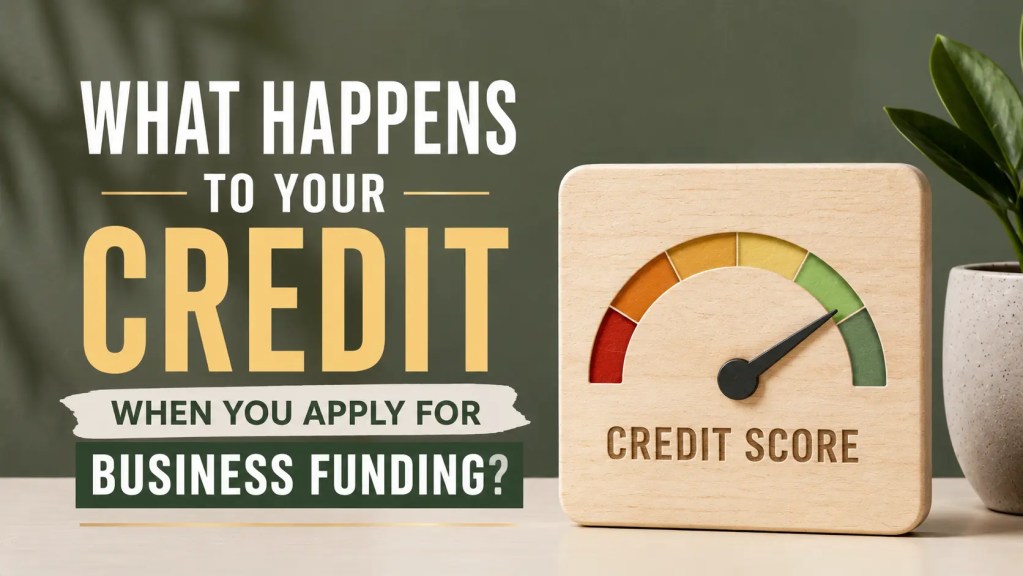
Every hard inquiry from a lender drops your personal score 3–7 points. At 600, you can’t absorb five hard pulls in 30 days without materially weakening your position. Identify 2–3 lenders whose published criteria align with your profile and apply to those first.
Use soft-pull pre-qualification tools where available. Many online lenders offer them.
—
Capital at the 600-score tier often comes with higher rates and tighter terms. That’s the reality. But operators who understand business funding solutions know that first-round funding isn’t the destination — it’s the mechanism.
You take $25K–$50K from a higher-cost source, deploy it into revenue-generating activity, establish a payment history with that lender, and use that track record to refinance or access better capital in 12–18 months. Meanwhile, your business credit profile is growing, your personal score is recovering, and your fundability profile is transforming.
| Phase | Funding Source | Goal |
|---|---|---|
| Phase 1 (Now) | Vendor accounts, SBA micro, equipment | Establish payment history |
| Phase 2 (6–12 months) | Business line of credit, secured cards | Build Paydex + utilization data |
| Phase 3 (12–24 months) | Conventional lenders, SBA 7(a) | Access larger, lower-cost capital |
According to SCORE’s small business research, businesses that establish formal credit profiles early are significantly more likely to access conventional financing within two years. The operators who treat the 600-score phase as a setup period — not a waiting period — are the ones who scale.
The 600 score is a starting point. Work the system correctly and it becomes a footnote.
Yes. Alternative lenders, CDFI-backed SBA microloans, equipment financiers, and invoice factoring companies routinely approve business owners in the 580–620 range. The key is matching the right funding product to your profile and having strong compensating factors like consistent revenue and clean bank statements.
No — they are separate scoring systems tracked by different bureaus. Your personal FICO (Equifax, Experian, TransUnion) and your business credit scores (Paydex, Experian Business, Equifax Business) operate independently. Building business credit now reduces your reliance on personal credit for future funding.
Net-30 vendor accounts and equipment financing are the lowest-friction options at 600. Net-30 vendors often have no minimum credit score requirement. Equipment financing is secured by the asset itself, which reduces lender risk and lowers the credit threshold required for approval.
You can establish a measurable Paydex score within 90 days by opening 3–5 net-30 vendor accounts and paying early. A fully developed business credit profile that unlocks conventional lender programs typically takes 12–24 months of consistent payment history across multiple trade lines and credit accounts.
Hard inquiries from lenders can drop your personal score 3–7 points each. At 600, this matters. Use soft-pull pre-qualification tools where available, and limit formal applications to 2–3 lenders whose criteria match your profile. Many business credit products — like vendor accounts — do not trigger hard pulls on your personal credit at all.
A better credit score starts with the right strategy. Let Credit Leverage X help you take control of your finances, improve your credit, and unlock the funding you deserve.
Start Your Credit Strategy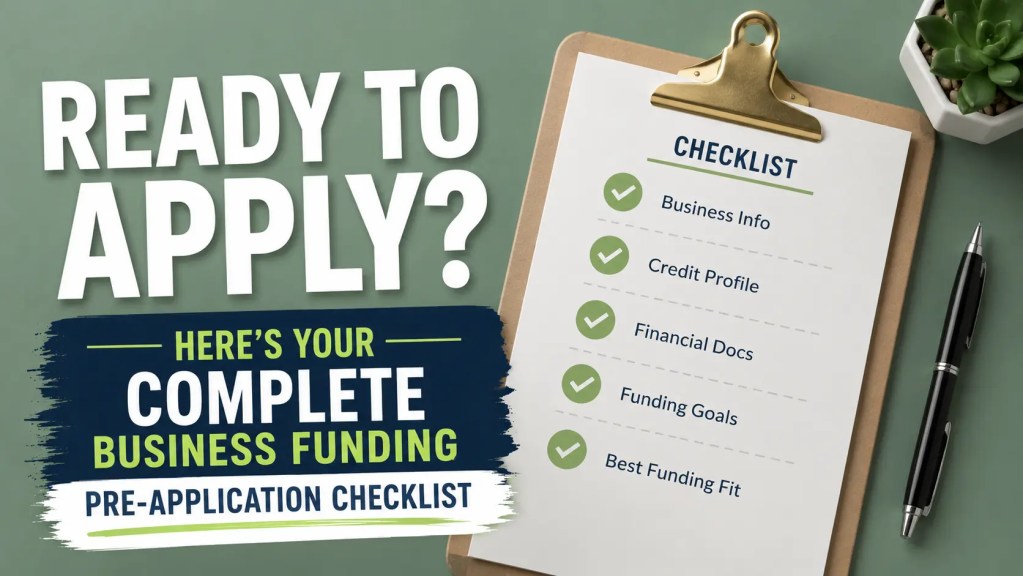




Subscribe now to keep reading and get access to the full archive.