Disclaimer: This article is for educational purposes only and does not constitute financial, legal, or investment advice. Credit Leverage X (CLX) educates and mentors entrepreneurs to help them responsibly access and manage business funding for sustainable growth.
TL;DR
Most business owners treat funding applications like lottery tickets — apply enough times and something will hit. That approach destroys your credit profile, burns through hard inquiries, and signals desperation to every underwriter who sees your file.
The operators pulling $50K–$250K in business capital aren’t doing anything magical. They’re applying with a prepared, fundable profile. This checklist is how you get there.
—
Business funding — even when structured under your EIN — almost always involves a personal guarantee and a personal credit pull. That means your personal FICO is still in the room whether you want it there or not.
Here’s the minimum personal credit baseline most serious lenders and card issuers expect:
| Credit Factor | Minimum Threshold |
|---|---|
| FICO Score (all three bureaus) | 680+ (720+ preferred) |
| Utilization Rate | Under 30% (under 10% optimal) |
| Derogatory Marks | Zero recent (last 24 months) |
| Hard Inquiries (last 12 months) | 3 or fewer |
| Account Age (average) | 3+ years |
Before you touch an application, pull all three bureaus — Equifax, Experian, TransUnion — and dispute any errors. The CFPB’s free dispute process is your first stop. Don’t assume your credit is clean because you’ve never missed a payment. Reporting errors are more common than most people realize, and a single misreported collection can cost you 40–60 points.
Utilization is your fastest lever. Paying balances down to under 10% of each card’s limit — not just overall — can move your score 20–40 points within a single billing cycle. Do this before you apply, not after.
—
Registering an LLC doesn’t make your business fundable. Lenders and card issuers underwrite your business entity as a separate borrower. If your entity has no credit profile, no financial history, and no legitimacy signals, you’re asking a stranger to lend to a ghost.
A fundable business entity includes:
Lenders cross-reference these signals. Inconsistencies between your Secretary of State filing, your bank account, and your credit application raise red flags that can trigger manual review or outright denial. Uniformity signals legitimacy.
Understanding how credit leverage works at the entity level changes how you think about business credit entirely — your EIN is a borrower with its own fundability score, and you need to build it deliberately.
—
Documentation gaps are a silent application killer. Underwriters don’t call you to ask for missing items — they decline and move on. Have every document ready before the first application goes out.
Beyond the basics, lenders assessing larger tranches of capital — $100K and above — often want to see a business plan or executive summary, a use-of-funds statement, and revenue projections. Operators who walk in with these documents in hand signal that they know how to manage capital, not just request it.
The SBA’s lender match resources provide a clear breakdown of what traditional lenders expect at each loan tier — worth reviewing even if you’re pursuing non-bank capital.
| Document | Why It Matters |
|---|---|
| Business Bank Statements | Proves cash flow and account behavior |
| P&L Statement | Shows operational profitability |
| Use-of-Funds Statement | Signals capital discipline to underwriters |
| Tax Returns | Confirms reported income matches actuals |
| Articles of Organization | Validates entity legitimacy |
—
Applying without a strategy isn’t just inefficient — it’s destructive. Each hard inquiry sits on your report for 24 months and is visible to every subsequent lender. Multiple hard pulls in a short window signals financial desperation, and underwriters are trained to read that signal.
Your strategy should answer three questions before any application goes out:
1. What type of funding am I targeting?
Business credit cards (0% intro APR products), SBA loans, revenue-based financing, and equipment financing each have different underwriting criteria. Know which product fits your profile and your use case.
2. What’s my funding sequence?
If you’re going after multiple products, order matters. Higher-limit cards and lines typically require stronger profiles — pursue those first when your inquiries are low and your profile is cleanest.
3. What am I deploying this capital into?
Funders at the $100K–$250K level want to see intentionality. Understand how to turn $50K into $250K in revenue before you take the capital — not after. Operators who can articulate ROI on borrowed capital are treated differently than those who can’t.
The Federal Reserve’s Small Business Credit Survey consistently shows that prepared applicants with complete documentation have significantly higher approval rates across every funding category. Preparation isn’t a soft advantage — it’s a statistical one.
—
Run this checklist the week before any application. If you can’t check every box, identify the gap and close it first.
| Pre-Application Item | Status |
|---|---|
| All 3 personal bureau reports pulled and reviewed | ☐ |
| Personal FICO 680+ across all bureaus | ☐ |
| Utilization under 30% (under 10% preferred) | ☐ |
| Fewer than 4 hard inquiries in last 12 months | ☐ |
| Business entity verified and consistent across all filings | ☐ |
| Business bank account active with 3+ months of statements | ☐ |
| EIN letter, voided check, and Articles of Org on hand | ☐ |
| P&L and balance sheet current (within 90 days) | ☐ |
| Funding type and sequence identified | ☐ |
| Use-of-funds statement drafted | ☐ |
Operators who work through the full business funding solutions framework before applying don’t just get approved more often — they get approved for larger amounts, at better terms, because they arrive looking like borrowers lenders want to compete for.
That’s the edge. It’s not a secret. It’s preparation.
—
Funding applications aren’t evaluated in isolation — they’re evaluated against your entire financial profile. Every gap, inconsistency, and inquiry tells a story to the underwriter reading your file. Your job before applying is to make sure that story reads exactly the way you want it to.
Check every box on this list. Close every gap you find. Then apply with confidence — because you’ve already done the work most of your competition hasn’t.
Most lenders want to see a personal FICO of at least 680 across all three bureaus, with 720+ giving you access to higher limits and better terms. Your score on just one bureau isn’t enough — underwriters typically pull all three and use the middle score.
Yes, but your options narrow significantly. With no business revenue, lenders rely almost entirely on your personal credit profile and guarantees. Startup founders with strong personal credit (720+) can still access 0% intro APR business cards and some SBA microloans — but expect lower limits until your entity builds its own financial history.
More than 3–4 hard inquiries in the last 12 months starts to hurt your approval odds, particularly for premium business credit products. Lenders interpret multiple recent inquiries as a sign of financial stress or capital-seeking desperation. Keep your inquiry count low by applying strategically in batches rather than sporadically over time.
Your personal profile is tied to your SSN and tracked by Equifax, Experian, and TransUnion. Your business credit profile is tied to your EIN and tracked by Dun & Bradstreet, Experian Business, and Equifax Business. Most business funding products underwrite both — but building a strong business credit profile over time reduces your dependence on personal guarantees for future capital.
Most operators can get fundable within 60–90 days with focused effort. Paying down utilization takes one billing cycle to reflect. Disputing credit errors takes 30–45 days. Building out your business entity documentation can happen in a week. The biggest time variable is your credit score — if it needs significant repair, budget 3–6 months for meaningful movement.
A better credit score starts with the right strategy. Let Credit Leverage X help you take control of your finances, improve your credit, and unlock the funding you deserve.
Start Your Credit Strategy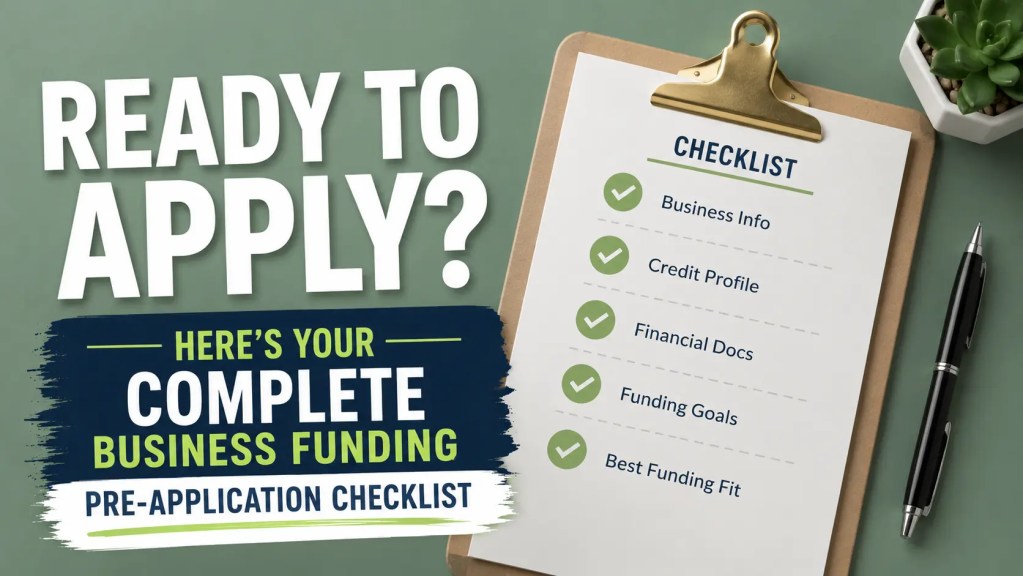




Subscribe now to keep reading and get access to the full archive.