Disclaimer: This article is for educational purposes only and does not constitute financial, legal, or investment advice. Credit Leverage X (CLX) educates and mentors entrepreneurs to help them responsibly access and manage business funding for sustainable growth.
TL;DR
A business line of credit is one of the most flexible capital tools available — revolving access, interest only on what you draw, reusable capacity. Yet most operators either don’t qualify when they apply or get approved for a fraction of what they need. The reason is almost never the lender. It’s positioning.
Thirty days is a tight window. But it’s enough if you’re not starting from zero and you understand what lenders are actually evaluating. This guide gives you the framework — no beginner hand-holding, no vague advice.
—
The approval decision on a business line of credit is not a single score — it’s a profile. Lenders are underwriting risk across four dimensions simultaneously.
| Pillar | What Lenders Evaluate | Minimum Threshold (Most Lenders) |
|---|---|---|
| Personal Credit | FICO score, utilization, derogatory marks | 680+ (720+ for best terms) |
| Business Credit | Paydex, Experian Intelliscore, SBSS | Active profile required |
| Revenue & Cash Flow | Monthly deposits, consistency, trends | 3–6 months bank statements |
| Time in Business | Legal entity age, not operational age | 6 months minimum; 12+ preferred |
The misconception most operators carry is that personal credit is the whole game. It’s not. A 750 FICO with no business credit profile, inconsistent deposits, and a six-month-old LLC will still get declined by most institutional lenders — or approved at a limit that insults the ask.
Understanding credit leverage as a system — not just a score — is what separates operators who close $150K lines from those who get approved for $5K.
—
This is not a passive process. Thirty days requires deliberate action in each week.
Start with a hard audit — not a soft check through a consumer app. Pull your full FICO 8 and FICO SBSS (Small Business Scoring Service) score. The SBSS is what the SBA uses for loans up to $500K and what many institutional lenders reference. A score below 155 on the SBSS is a hard wall at most banks.
Simultaneously, pull your business credit reports from all three business bureaus:
If your business has no file with these bureaus, that is your first problem and your first week’s project.
Action items for Week 1:
Business credit is built through net-30 vendor accounts that report to the business bureaus. You need at minimum three active tradelines reporting before most lenders will extend a meaningful line.
Strategic net-30 vendors — suppliers like Uline, Quill, and Grainger — extend credit without a personal guarantee and report to D&B. If you have zero business credit history, open three accounts in Week 1 and make purchases immediately so they begin reporting. Some will post within 30 days.
This is the core logic behind the 2-2-2 credit rule — building a minimum viable credit profile across two bureaus, two tradeline types, and two reporting cycles before pursuing larger credit facilities.
Lenders don’t just look at your revenue — they look at how your revenue behaves. Three things destroy approvals even when revenue is strong:
1. Inconsistent deposit patterns — large gaps followed by large deposits signal cash flow problems, not strong revenue
2. High NSF frequency — non-sufficient funds incidents in the past 90 days are automatic red flags
3. Business and personal funds commingled — if your business bank account shows personal expenses or personal transfers, underwriters mark it down
Your goal in Week 3 is to clean up the last 90 days of bank statements and prepare a tight documentation package. Most lenders will want:
| Document | Purpose | Pro Tip |
|---|---|---|
| 3–6 months business bank statements | Revenue verification | Use the account with the cleanest, most consistent deposits |
| Business tax returns (1–2 years) | Income substantiation | If filed, submit; if not, P&L statements + accountant letter |
| Articles of Incorporation / LLC Agreement | Entity legitimacy | Must match bureau records exactly |
| EIN Confirmation Letter (CP-575) | IRS registration proof | Have it on hand — many lenders require it |
The Federal Reserve’s Small Business Credit Survey consistently shows that documentation gaps — not creditworthiness — are the leading reason small business credit applications are denied or delayed. Underwriters can only approve what they can verify.
Lender sequencing is where most operators lose months of progress. Every hard inquiry costs points. Multiple hard pulls in a short window from different lender types compound the damage and signal desperation to underwriters who can see inquiry patterns.
The right sequence for a 30-day push:
Step 1 — Start with lenders who do soft pulls first. Many fintech lenders (Bluevine, Fundbox, OnDeck) use soft-pull pre-qualification. Get pre-qualified before committing to a hard pull.
Step 2 — Apply to the highest-probability lender first. If you have strong revenue but thin credit, fintech lenders will outperform banks. If you have a seasoned relationship with a community bank, start there. Match your profile to the lender’s approval model.
Step 3 — Stack intelligently, not aggressively. Applying to 6 lenders in one day does not improve your odds. It signals financial distress. Two to three well-matched applications over a 2-week window is the ceiling.
For a broader view of how revolving credit fits into a full capital structure, review how operators use business funding solutions to build layered access without overexposing their credit profile.
—
These are the avoidable errors that push a 30-day qualification into a 90-day grind.
—
| Profile Element | Minimum Acceptable | Strong Position |
|---|---|---|
| Personal FICO | 680 | 720+ |
| Business Credit Tradelines | 3 reporting | 5+ with payment history |
| Monthly Revenue (avg deposits) | $10,000 | $25,000+ |
| Time in Business | 6 months | 12+ months |
| NSF Incidents (90 days) | 0 | 0 |
| Personal Utilization | Under 30% | Under 15% |
Hit this profile across the board and you are not hoping for approval — you are presenting a fundable business. Lenders approve profiles, not personalities. Build the profile.
For operators ready to think beyond a single credit line and into full capital deployment, how to turn $50K into $250K in revenue outlines exactly how to put approved capital to work at scale.
Additionally, Investopedia’s breakdown of business lines of credit provides a solid reference for understanding how revolving credit facilities are structured and priced across lender types.
—
Possibly, but your options narrow significantly. Without a business credit profile, most institutional lenders will require a personal guarantee and will underwrite primarily on your personal FICO. Fintech lenders like Bluevine or Fundbox rely more heavily on revenue and bank statement data, making them more accessible for businesses with thin credit files. Build at least three net-30 vendor tradelines reporting to D&B or Experian Business before applying to maximize your limit and terms.
For most bank and SBA-affiliated products, you need a minimum 680 personal FICO — though 720+ gets you materially better terms and higher limits. Fintech lenders will approve down to 620–640 in some cases, but at significantly higher draw fees or interest rates. Your FICO SBSS score (used for SBA products) should be 155 or above. Both scores matter and should be optimized in parallel.
Fintech lenders can approve and fund within 24–72 hours once your documentation is submitted. Traditional banks and credit unions typically take 2–4 weeks due to manual underwriting. SBA-backed lines can take 30–90 days. If your goal is 30-day qualification, fintech lenders are the most realistic path — provided your revenue, credit, and documentation are already in order before you apply.
A hard inquiry will temporarily reduce your personal FICO by 5–10 points in most cases. The impact is minor if it’s isolated, but multiple hard pulls across different lender types within a short window compound the damage and create a negative signal in your credit report’s inquiry section. Use soft-pull pre-qualification tools whenever available, and limit hard-pull applications to two or three well-matched lenders over a 2-week period.
Both are revolving credit facilities, but they operate differently in practice. A business line of credit typically offers higher limits ($25K–$500K+), lower interest on drawn balances, and funds deposited directly into your bank account — making it usable for payroll, inventory, or any cash-based expense. Business credit cards are better suited for recurring operational purchases and often come with rewards. For capital deployment at scale, a line of credit gives you more flexibility and typically lower cost of capital than a credit card.
A better credit score starts with the right strategy. Let Credit Leverage X help you take control of your finances, improve your credit, and unlock the funding you deserve.
Start Your Credit Strategy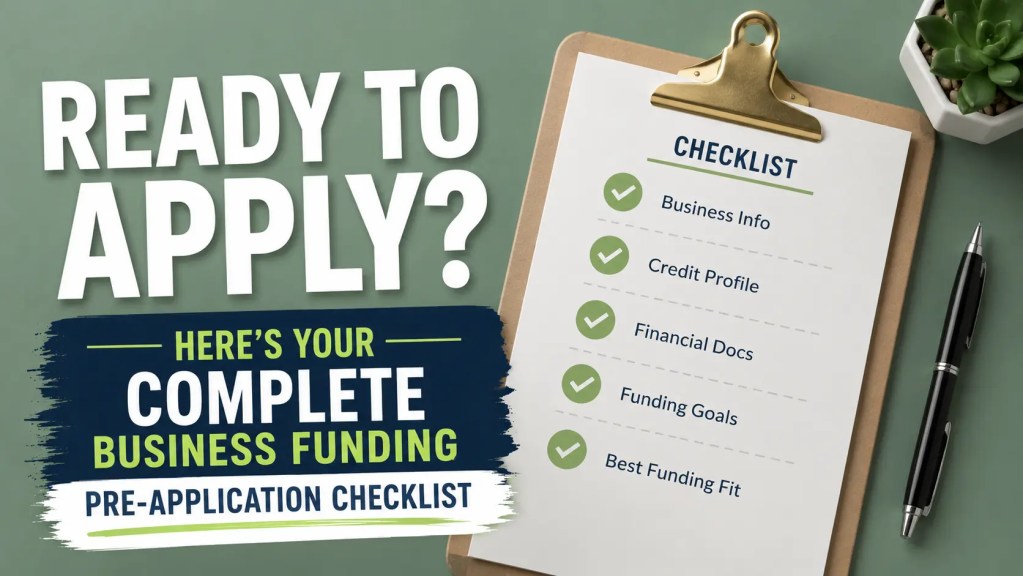




Subscribe now to keep reading and get access to the full archive.